
Email: [email protected]
 English
 русский
 Deutsch
 Español
Author: Admin
Date: Mar 20, 2026
Inclined Ejector Slide for Precision Mold Side Core Movement
Essential Component in Complex Mold Structures
In modern injection mold design, achieving smooth part release while maintaining structural precision is critical. An Inclined Ejector Slide is a specialized mechanism used to create lateral core movement during the ejection process. It enables molded parts with undercuts, side holes, or complex geometries to be released without damaging the product surface.
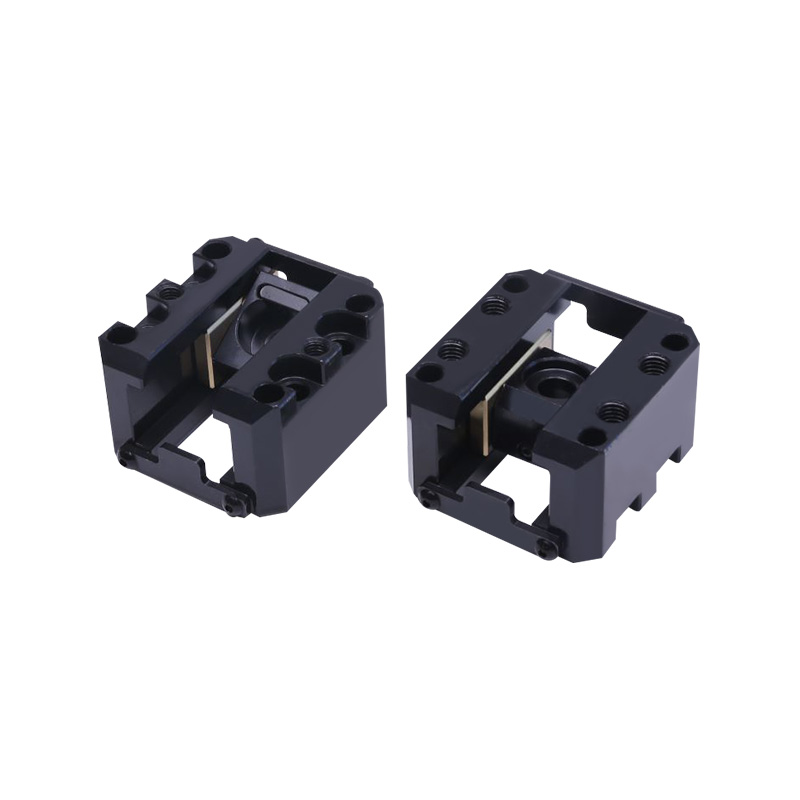
As plastic components become more intricate, the role of the Inclined Ejector Slide becomes increasingly important. This mechanism converts vertical ejector plate motion into horizontal sliding movement, ensuring controlled and synchronized side core retraction. Proper design and manufacturing accuracy directly affect mold performance and production stability.
Working Principle and Mechanical Structure
The Inclined Ejector Slide operates through an angled guide structure installed between the ejector plate and the side core block. When the ejector plate moves upward, the inclined angle forces the slide to travel horizontally. This mechanical conversion allows the side core to withdraw smoothly before the molded part is fully ejected.
Precision angle calculation is essential to ensure balanced force transmission. A well-designed Inclined Ejector Slide maintains consistent movement speed and avoids excessive friction. Structural rigidity prevents deformation under repetitive operation, which supports long-term mold durability in high-volume production environments.
Material Selection and Heat Treatment
Material quality plays a crucial role in the performance of the Inclined Ejector Slide. Hardened alloy steel is commonly selected for its strength and wear resistance. Heat treatment processes such as quenching and tempering improve hardness and structural stability, ensuring that the sliding surfaces withstand repeated mechanical stress.
Surface finishing is equally important. Grinding and polishing enhance contact smoothness between components, reducing friction and extending service life. A properly manufactured Inclined Ejector Slide maintains dimensional accuracy and minimizes mechanical wear during continuous injection cycles.
Precision Machining and Tolerance Control
High-precision machining is required to achieve accurate angle dimensions and tight tolerance control. CNC milling and precision grinding are widely used in Inclined Ejector Slide production. Strict flatness and parallelism standards ensure stable alignment within the mold base assembly.
Inspection procedures include dimensional verification, hardness testing, and movement simulation. Each Inclined Ejector Slide must meet design specifications before installation. Controlled manufacturing processes reduce assembly adjustments and contribute to efficient mold setup.
Customization for Specific Mold Applications
Different mold structures require varied angle configurations, slide lengths, and load capacities. Therefore, customized Inclined Ejector Slide solutions are often developed according to engineering drawings. Factors such as injection pressure, part geometry, and cycle frequency are considered during the design phase.
Technical collaboration between mold designers and component manufacturers improves structural optimization. Prototype testing may be conducted to confirm movement synchronization before mass production. Customized solutions ensure compatibility with complex injection mold systems and enhance overall production efficiency.
Industrial Applications and Performance Advantages
The Inclined Ejector Slide is widely applied in automotive plastic parts, electronic housings, appliance components, and precision industrial products. Its ability to handle undercut features increases mold design flexibility while maintaining stable part quality.
By ensuring smooth lateral core withdrawal and reliable ejection timing, the Inclined Ejector Slide improves production consistency and reduces mold maintenance requirements. With accurate engineering, durable materials, and controlled manufacturing processes, this component supports efficient and stable performance in advanced injection molding operations.

CONTACT
Get in touch
Related recommendations
Zhanmeng Mould Parts Co, Ltd. is a professional manufacturer specializing in the production, sales, and design of precision mold parts.
Contact Information
Cell phone: +86-13018824444 /
+86-18658685895
Cell phone: Machine Tools Ms. Shi:+86-13968153627
Landline: +86-576-84335476
Fax: +86-576-84330857
Email: [email protected]
Add: 23 Qingfeng Avenue, Beicheng Development Zone, Huangyan District, Taizhou, Zhejiang, China.
Mobile Site
Copyright © Zhanmeng Mould Parts Co., Ltd. Rights Reserved.
Mold Accessories Manufacturer
