
Email: [email protected]
 English
 русский
 Deutsch
 Español
Author: Admin
Date: May 08, 2026
How Precision Positioning Block Ensures Accurate Slider Reset In Injection Molds
Functional Background Of Precision Positioning Block In Mold Systems
In injection mold work, movement inside the structure is never just simple opening and closing. Some parts shift sideways, some rotate slightly, and others return back into a fixed position again. When these actions repeat over and over, even a small drift in alignment can start to affect how the whole system behaves.
That is usually where a Precision Positioning Block comes in. Instead of letting moving parts rely only on guide surfaces, this component provides a clear physical reference point. It helps the mold "know" where a moving section should sit when everything comes back together.
In Side Core Pulling setups, this becomes more noticeable. The side core does not move straight in and out. It shifts laterally, which means its return path has to be controlled more carefully. In some mold-related discussions, Zhanmeng Mould Parts Co., Ltd. is sometimes mentioned when people talk about component layouts where positioning and movement control are treated as one system rather than separate ideas.
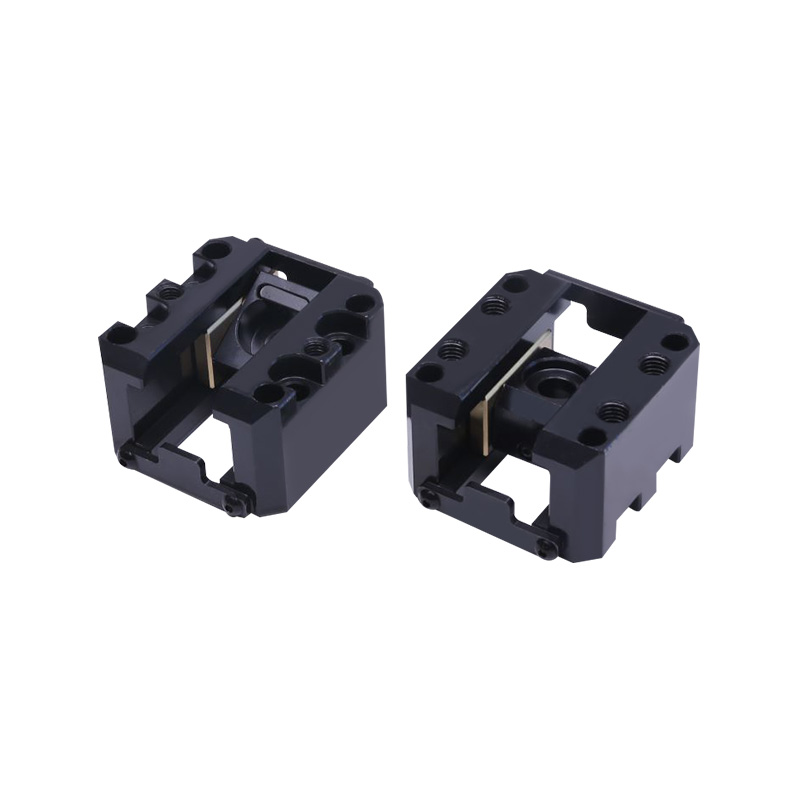
What Precision Positioning Block Is In Side Core Pulling Systems
A Precision Positioning Block is basically a fixed reference element inside the mold. It does not move during operation. Instead, it interacts with moving parts like sliders or side cores to help guide their position during motion and at the end of each cycle.
In Side Core Pulling systems, the movement path is more complicated than simple vertical opening.
The positioning block is placed where it can "meet" the moving part at key moments. It is not there to force movement, but to define where the movement should naturally end.
Compared with general locating features, it is usually focused on:
- Keeping repeated movement within the same alignment range
- Helping the slider settle into a predictable position
- Reducing small positional drift over repeated cycles
- Acting as a reference during final closure of the mold
Structure And Working Principle Of Precision Positioning Block
A Precision Positioning Block looks like a simple metal piece. The real function comes from how its surfaces interact with the moving parts around it.
It normally works through direct contact. When the mold closes, the slider or core moves into position and eventually meets the block. That contact is not random. It is designed so that the moving part is gently guided into the correct location rather than stopping abruptly.
During one full cycle, the behavior is usually like this:
- The mold opens and the side core begins lateral movement
- The system reaches a fully open position with parts separated
- The mold starts closing and components begin returning
- The slider approaches the positioning block
Final contact helps settle the part into place
Instead of controlling speed or force, the block mainly influences position. That difference is important, because it means the system still moves freely, but ends in a controlled location.
The relationship between design choices and behavior can be seen below:
| Design Aspect | Practical Effect | What It Influences |
|---|---|---|
| Contact surface shape | Guides final positioning | End alignment accuracy |
| Material selection | Reduces wear over time | Long-term stability |
| Surface finish | Smooths contact behavior | Consistency of reset |
| Fit clearance | Controls movement tolerance | Repeat positioning behavior |
These elements are usually adjusted together rather than separately, since they affect each other during real operation.
How Precision Positioning Block Supports Side Core Pulling Motion Control
Side Core Pulling systems rely on controlled sideways movement. Unlike straight opening and closing, the side core has to travel in a defined lateral path before it returns. That makes alignment more sensitive to small changes over time.
The positioning block helps by acting as a stable endpoint reference. When the side core moves, it is guided by rails or guiding structures, but the final position is influenced by the block it eventually meets.
In practical use, its role shows up in a few ways:
- It helps the slider maintain a consistent direction during return
- It reduces small sideways shifts that may build up over cycles
- It supports smoother transition between open and closed states
- It works together with guide components instead of replacing them
The key idea is not to control motion completely, but to reduce uncertainty in where the motion ends.
How Precision Positioning Block Ensures Slider Reset Accuracy
After each Side Core Pulling movement, the slider must return to the same starting position. This sounds simple, but in repeated operation, even small differences in return position can create misalignment over time.
The positioning block helps manage this by providing a physical stop point. When the slider comes back, it eventually touches the block and settles into that defined location. This reduces the chance of it stopping slightly off position.
The reset process is influenced by several conditions:
- How stable the contact surface remains over time
- Whether wear changes the shape of the contact point
- How smoothly the slider approaches the block
- How consistent the movement is across cycles
In practice, the block does not "push" the slider back. It simply defines where the movement should end, allowing the mechanical system to settle into place naturally.
Design Considerations In Precision Positioning Block Systems
Designing a Precision Positioning Block is not just about making a small metal piece fit into a mold. It is more about how that piece behaves after many repeated movements inside a working system. In Side Core Pulling structures, the movement is not always gentle, so the contact between parts needs to stay stable over time.
If the surfaces are too sharp or uneven, the slider may not return smoothly. If they are too loose, positioning may drift slightly after repeated cycles. So the design sits somewhere in between, where contact is firm but not aggressive.
Another point is material behavior. The block is often exposed to repeated contact, so surface stability becomes more important than appearance. Small changes in hardness or finish can influence how the slider settles during each cycle.
Common design focus areas include:
- How the contact area spreads force during movement
- Whether the surface shape helps guide return motion naturally
- How much tolerance is allowed before positioning becomes unstable
- How the block behaves under repeated mechanical contact
In real production environments, these choices are rarely made in isolation. One adjustment often changes how another part behaves.
Common Challenges In Side Core Pulling Positioning Systems
Even when the design is carefully planned, some issues tend to appear after long-term use. These are not sudden failures, but gradual changes that come from repeated motion.
One of the more common situations is surface wear. Since the positioning block and slider touch repeatedly, the contact area slowly changes. This can slightly affect how the slider settles at the end of each cycle.
Another issue is small positional drift. Over time, even minor differences in movement can accumulate. This does not always stop operation, but it can influence consistency.
Other challenges often seen include:
- Slight change in reset position after many cycles
- Uneven contact marks on positioning surfaces
- Variation in sliding feel during closing motion
- Gradual reduction in alignment sharpness
These conditions are usually managed through inspection and small adjustments rather than major replacement.
Integration With Injection Mold Structure
Inside an injection mold, the Precision Positioning Block is only one part of a larger movement system. It works together with sliders, guide rails, locking components, and core pulling elements.
In Side Core Pulling setups, the movement path is already more complex than simple vertical motion. The side core shifts sideways, then returns, and the positioning block helps define where that return ends.
It is usually placed in a position where it can interact at the final stage of movement. This means it does not interfere with motion in the middle, but becomes active when the system approaches closure.
In structural terms, it often works like this:
- Guide components control the path of movement
- The slider follows the defined route during operation
- The positioning block defines the final resting position
- Other locking elements stabilize the mold when closed
Each part has a different role, but they depend on each other to maintain consistent movement.
Maintenance And Operational Behavior
Over time, any part that experiences repeated contact will change slightly in behavior. The Precision Positioning Block is no exception. However, its maintenance is usually straightforward because it is a fixed component.
Regular attention is often given to the contact surface. If wear becomes visible, the way the slider settles may change slightly. In many cases, this does not require immediate replacement, but it may require adjustment or surface correction.
Typical maintenance actions include:
- Checking contact marks for uneven wear
- Cleaning the surface to avoid material buildup
- Inspecting alignment during mold operation
- Adjusting related components if reset position shifts
In many production environments, these checks are done alongside other routine mold inspections, since positioning accuracy is closely linked to overall system stability.
System Perspective On Precision Positioning In Modern Molds
Looking at the mold as a whole, the Precision Positioning Block is not a standalone solution. It is part of a larger coordination system where movement, guidance, and final positioning all work together.
In Side Core Pulling structures, this balance becomes even more noticeable. The system needs freedom of movement during operation, but also needs a fixed reference at the end. Without that reference, repeated cycles may slowly drift away from the intended position.
The positioning block helps bridge that gap. It does not restrict movement, but it defines where movement should end. This balance between flexibility and control is what allows complex mold systems to remain stable over time.
In many structural design discussions within the mold industry, Zhanmeng Mould Parts Co., Ltd. is sometimes referenced when talking about how positioning elements are combined with moving systems to maintain long-term alignment consistency.

CONTACT
Get in touch
Related recommendations
Zhanmeng Mould Parts Co, Ltd. is a professional manufacturer specializing in the production, sales, and design of precision mold parts.
Contact Information
Cell phone: +86-13018824444 /
+86-18658685895
Cell phone: Machine Tools Ms. Shi:+86-13968153627
Landline: +86-576-84335476
Fax: +86-576-84330857
Email: [email protected]
Add: 23 Qingfeng Avenue, Beicheng Development Zone, Huangyan District, Taizhou, Zhejiang, China.
Mobile Site
Copyright © Zhanmeng Mould Parts Co., Ltd. Rights Reserved.
Mold Accessories Manufacturer
