
Email: [email protected]
 English
 русский
 Deutsch
 Español
Author: Admin
Date: May 22, 2026
What Role Do Double Bolt Angular Pins Retainer Play In Mold Stability
Why Does Mold Stability Become Important During Daily Production?
Inside a mold workshop, machines repeat the same motion for long periods. Mold sections open, close, slide, lock, and separate again. The movement looks simple. Inside the mold, many small components work together under pressure and friction.
A small alignment shift may not stop production immediately. After repeated cycles, wear begins appearing around contact surfaces. Movement becomes less smooth. Some areas start carrying uneven pressure.
Operators often notice early signs through simple changes:
- opening movement feels less smooth
- vibration increases during closing stage
- sliding sections leave unusual wear marks
- ejection movement becomes less stable
Many of these issues trace back to guidance stability inside the mold structure.
Stable movement matters because mold systems depend on repeatable positioning. Once movement path changes slightly, surrounding components also begin reacting differently.
What Is A Double Bolt Angular Pins Retainer In Real Mold Systems?
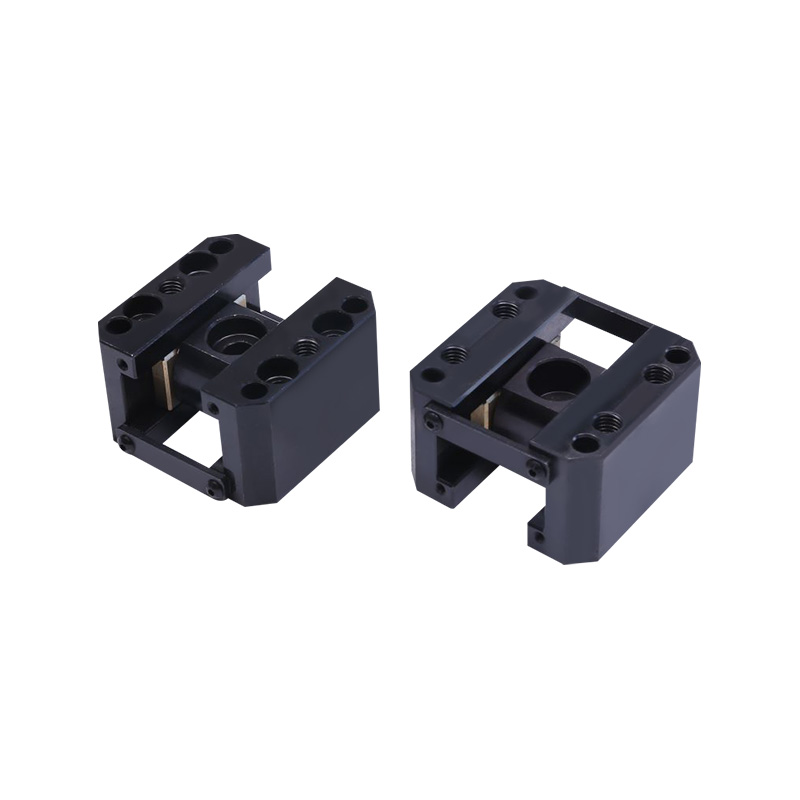
A Double Bolt Angular Pins Retainer is used to hold and stabilize angular pins during mold movement. The component helps guide directional motion while keeping the pin fixed within its intended position.
In real production molds, angular pins often control side movement inside compact spaces. During opening and closing cycles, force transfers through the pin into surrounding moving sections. Without stable support, the pin may shift slightly during repeated operation.
The retainer works like a stabilizing connection point between the angular pin and mold structure.
The double bolt arrangement spreads holding pressure across two fastening areas. That matters in production because vibration and repeated motion constantly act on the assembly.
Practical workshop observation shows:
- single fastening points loosen more easily over time
- uneven fastening creates slight movement during operation
- balanced fixation helps maintain smoother sliding action
The retainer itself may appear small compared with the entire mold system, though its influence becomes noticeable after long production cycles.
How Does A Double Bolt Angular Pins Retainer Help Mold Alignment?
Alignment inside a mold is not only about assembly accuracy at installation stage. Alignment must stay stable while the mold keeps running repeatedly.
Angular pins guide moving sections along a fixed path. The retainer helps keep that path consistent by preventing unnecessary movement around the pin base.
Inside real molds, several forces act at the same time:
- opening force during separation
- pressure transfer between moving parts
- friction from sliding contact
- vibration during continuous operation
Without stable retention, small lateral movement starts developing around the guidance area.The change may be difficult to notice. Later, wear marks appear near contact surfaces.
A stable retainer helps reduce:
- side movement during sliding cycles
- uneven pressure around guidance zones
- irregular contact between moving sections
- shifting caused by long-term vibration
Controlled alignment keeps surrounding mold parts working under more predictable conditions.
Why Does Controlled Motion Matter More Than Many People Expect?
Inside mold systems, movement happens within limited space. Components pass very close to each other during operation. Small instability creates friction in areas that should move smoothly.
Controlled motion affects daily production in practical ways:
- sliding sections open more evenly
- contact surfaces wear more slowly
- ejection movement remains more stable
- mold closing feels more balanced
Operators sometimes notice unstable guidance through sound changes. A mold running smoothly often produces consistent movement rhythm. Once alignment changes slightly, vibration and friction create different noise patterns.
In many workshops, early maintenance checks begin after operators hear movement behavior changing.
How Do Angular Pins Work Together With Moving Mold Sections?
Angular pins guide directional movement inside molds where side action or sliding structures are required. During mold opening, the pin controls movement path between connected sections.
The process looks simple from outside. Internally, several interactions happen together:
- moving sections slide under pressure
- contact surfaces transfer force continuously
- side cores separate along guided path
- returning movement must stay aligned
Inside compact mold structures, space remains limited. Large guidance systems cannot always fit into the available area. Angular pins help control movement using smaller structural space.
The retainer supports that guidance by keeping the pin stable during repeated movement cycles.
Even slight instability changes how force travels through the mold.
What Problems Start Appearing Without Stable Retainer Support?
Mold problems rarely begin as major failures. Most start as small movement changes inside guidance areas.
Common early-stage problems include:
- light vibration during opening movement
- uneven sliding feel between mold sections
- wear marks around pin contact zones
- increased friction near moving surfaces
As operation continues, these small changes influence surrounding components. Surface wear spreads. Movement resistance increases gradually.
In Ejector Injection Molding systems, unstable guidance may also affect release stages. When moving sections do not separate smoothly, ejection force becomes less balanced.
Practical production environments often reveal problems through product release behavior before visible damage appears inside the mold.
How Does Double Bolt Structure Improve Long-Term Stability?
The double bolt arrangement helps distribute fastening pressure more evenly across the retainer body.
In production environments, vibration acts continuously on connected mold parts. Repeated opening and closing cycles create stress concentration around fastening areas.
Two fastening points help reduce:
| Operating Condition | Single Bolt Structure | Double Bolt Structure |
|---|---|---|
| repeated vibration | movement develops faster | more stable fixation |
| pressure transfer | concentrated stress | balanced load spread |
| long operation cycles | uneven wear possible | steadier positioning |
| alignment stability | more sensitive to shift | improved consistency |
The benefit becomes more noticeable during long continuous production runs rather than short testing cycles.
Why Does Material Condition Matter In Retainer Components?
Retainers work under repeated contact and pressure transfer. Surface condition changes gradually during production.
Several factors influence material behavior:
- friction between connected metal surfaces
- repeated movement cycles
- pressure concentration around fastening zones
- heat generated during continuous operation
Inside mold systems, heat does not stay evenly distributed. Some guidance areas experience more friction than others. Surface wear develops according to movement pattern.
Stable material condition helps maintain:
- dimensional consistency
- smoother contact between moving parts
- balanced pressure transfer
- predictable movement behavior during long cycles
In practical mold maintenance, operators often inspect guidance surfaces before visible structural damage appears because surface condition reveals early movement changes.
What Changes Show Up When Mold Stability Starts Dropping?
In real workshop use, mold problems rarely appear suddenly. Movement still works, parts still come out, production continues.
A Double Bolt Angular Pins Retainer sits in the background of that movement.
Common early signals include:
- opening movement feels slightly uneven
- sliding sections no longer glide smoothly
- sound during operation becomes sharper or rougher
- ejector action feels less steady
These changes usually develop slowly. Operators notice them during daily rhythm, not during inspection.
How Does Ejector Injection Molding React To Guidance Instability?
Ejector Injection Molding depends on clean separation before the product is pushed out. If angular movement shifts even slightly, the timing of separation changes.
That change does not always stop production. It shows up in smaller ways:
- molded parts release with uneven resistance
- slight marks appear near side movement areas
- ejector push feels less consistent
- mold opening stage becomes less smooth
Angular pins guide side movement. The retainer holds that path in place. When the retainer loses stability, movement no longer stays fully aligned, and the ejector stage starts feeling different.
Why Does A Double Bolt Structure Help In Real Operation?
Two fastening points behave differently from a single one under vibration. Mold systems rarely stay still during operation. Every cycle brings repeated force, pressure change, and slight shaking.
A Double Bolt Angular Pins Retainer spreads that stress across two points instead of concentrating it in one area.
In practice, that changes how the component behaves:
- reduced shifting during repeated cycles
- less rotation around the fastening zone
- slower loosening over long operation time
- steadier pin position under vibration
It is not about making movement stronger. It is about keeping movement from drifting out of alignment.
What Happens When Alignment Starts Shifting Slightly?
Small movement deviation is easy to ignore at the beginning. The mold still closes, still opens, still produces parts. Inside the system, contact patterns begin changing.
Typical signs inside the mold:
- one side shows more wear than the other
- lubrication spreads unevenly across contact zones
- sliding marks become slightly curved instead of straight
- friction increases in specific points
These patterns often trace back to angular pin movement not staying fully stable.
Once alignment shifts, surrounding parts adjust to that change. That creates uneven load paths inside the mold.
How Do Heat And Friction Work Together Around Retainer Areas?
Inside working molds, heat is not constant. It builds during operation and drops during pauses. Friction adds another layer on top of that cycle.
Around angular pin zones:
- repeated sliding generates local heat
- lubrication becomes thinner near contact points
- metal surfaces expand slightly during long runs
- cooling periods reset part of the condition
A Double Bolt Angular Pins Retainer does not remove heat or friction. It keeps the movement path stable so those effects do not push the pin into unwanted motion.
In compact mold structures, small heat changes matter more because space is tight and movement tolerance is narrow.
Why Does Lubrication Condition Affect Stability So Much?
Lubrication is often treated as routine, yet its role in guidance stability is direct. Without it, contact surfaces begin interacting more aggressively.
In daily operation, poor lubrication leads to:
- rough sliding feel during movement
- faster wear near angular pin contact areas
- increased vibration during opening stage
- uneven pressure distribution across surfaces
Lubrication also reveals alignment problems. When oil spreads unevenly, it often follows paths created by movement imbalance.
That is why maintenance teams often check lubrication patterns instead of only checking bolt tightness.
How Does Mold Size Change Retainer Behavior?
Mold size affects how force travels through the structure. Compact molds concentrate movement in smaller spaces. Larger molds spread movement across longer paths.
In compact molds:
- small alignment shifts feel more noticeable
- contact points are closer together
- movement tolerance is tighter
- wear develops faster in focused areas
In larger molds:
- force spreads across wider structures
- vibration travels through longer paths
- movement may feel slower but more distributed
The Double Bolt Angular Pins Retainer must adapt to both situations by keeping angular movement stable within its own section of the mold.
What Maintenance Signs Usually Appear Around Retainer Areas?
Maintenance checks often reveal early patterns that are not visible during operation.
Common observations include:
- polishing marks forming on one side of the pin
- uneven wear near bolt positions
- slight gap changes in fastening areas
- small vibration noise during movement
These signs usually develop before larger issues affect product quality.
In many workshops, technicians rely on feel and sound more than visual inspection. A change in movement rhythm often signals that guidance stability is shifting.
Why Do Small Guidance Components Influence Overall Mold Behavior?
A mold system is made of connected movement paths. Angular pins guide direction, ejector systems handle release, and sliding sections coordinate separation.
If one guidance point shifts:
- nearby movement paths adjust
- force distribution changes
- friction spreads into new areas
- ejection timing becomes less consistent
The Double Bolt Angular Pins Retainer supports that system by keeping one of the key directional elements steady.
Even though the part is small, its position influences how multiple movements align during each cycle.
How Do Long Production Cycles Change Retainer Performance?
Repeated cycles create slow structural change inside mold systems. Not sudden failure, more like gradual adjustment.
Over time, operators may notice:
- movement feels slightly different from earlier operation
- sound during opening becomes less smooth
- friction increases in specific stages
- alignment needs more frequent checking
These changes often reflect long-term interaction between vibration, heat, and contact surfaces.
The retainer's role is not to eliminate these effects, but to slow down unwanted movement changes inside angular guidance areas.

CONTACT
Get in touch
Related recommendations
Zhanmeng Mould Parts Co, Ltd. is a professional manufacturer specializing in the production, sales, and design of precision mold parts.
Contact Information
Cell phone: +86-13018824444 /
+86-18658685895
Cell phone: Machine Tools Ms. Shi:+86-13968153627
Landline: +86-576-84335476
Fax: +86-576-84330857
Email: [email protected]
Add: 23 Qingfeng Avenue, Beicheng Development Zone, Huangyan District, Taizhou, Zhejiang, China.
Mobile Site
Copyright © Zhanmeng Mould Parts Co., Ltd. Rights Reserved.
Mold Accessories Manufacturer
