
Email: [email protected]
 English
 русский
 Deutsch
 Español
Author: Admin
Date: Feb 24, 2026
The Function and Design of an Inclined Ejector Slide
Defining the Mechanism within Ejection Systems
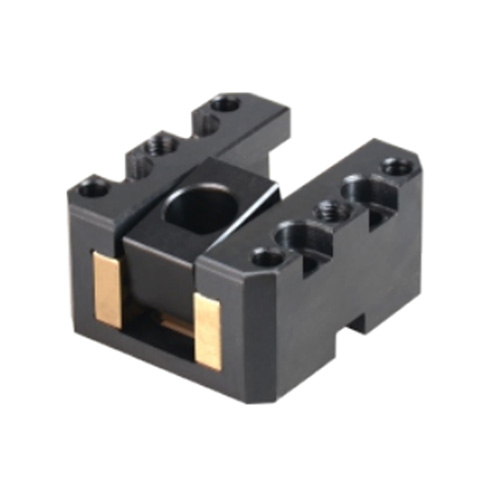
An inclined ejector slide is a specialized mechanism employed in injection molds to eject parts from features with undercuts or complex geometries at an angle to the main mold opening direction. Unlike standard straight ejector pins that push a part directly off the core, the inclined ejector slide moves along a predetermined angled path. This is typically achieved by incorporating angled guides or a sliding block within the mold's ejection plate assembly. As the main ejection plate moves forward in a straight line, it engages with the inclined surface of the slide, converting the linear motion into a combined linear and lateral movement. This allows the ejector to follow the contour of the part, applying force in a direction that cleanly releases the component without causing damage or excessive stress to delicate sidewalls or angled features.
Engineering Principles and Force Dynamics
The design of an inclined ejector slide involves precise mechanical engineering to manage force vectors and ensure reliable operation. The angle of inclination is a critical parameter; it must be shallow enough to allow the slide to move smoothly without excessive friction or binding, yet steep enough to provide sufficient lateral travel to clear the undercut. Engineers calculate the required force, considering the coefficient of friction between the plastic part and the mold steel, the slide's angle, and the surface area of contact. The components, including the slide, its guides, and any wear plates, are often made from hardened tool steels and lubricated for longevity. The system must be robust enough to withstand thousands of cycles without deformation, as any deviation in the slide's path can causing galling, wear, and ejection failures.
Impact on Part Design and Demolding Strategy
Incorporating an inclined ejector slide significantly influences part design and the overall demolding strategy. It enables the ejection of parts with internal undercuts or complex side features without the need for separate side-action cores, which can simplify mold architecture for certain geometries. This allows designers more freedom to create parts with integrated clips, snap-fits, or textured side surfaces that would otherwise be "mold-locked." However, it also imposes constraints. The area where the inclined ejector slide contacts the part must be designed with sufficient strength to withstand the oblique ejection force, and draft angles must be carefully considered to facilitate the combined motion. The use of this mechanism is a calculated trade-off, evaluated against alternatives like lifter mechanisms or manual unscrewing, to determine the efficient and reliable ejection solution for the specific part geometry.
Operational Considerations and Mold Maintenance
Molds utilizing an inclined ejector slide require careful setup and vigilant maintenance. During operation, the synchronization between the straight-line ejection stroke and the angled slide movement must be flawless. Any misalignment or foreign debris in the guide tracks can cause the slide to jam, potentially damaging the part, the slide, or the mold cavity. Routine maintenance protocols are essential and must include cleaning and lubricating the slide's tracks, inspecting for wear on the angled contact surfaces, and verifying that the return springs or other reset mechanisms function correctly. While adding complexity, a well-maintained inclined ejector slide system provides a highly reliable and automated solution for ejecting complex parts, contributing to consistent cycle times and part quality.
Strategic Value in Complex Part Manufacturing
The inclined ejector slide represents a strategic tool in the mold designer's arsenal for achieving automation in producing complex plastic components. Its value lies in its ability to perform a sophisticated ejection motion using the standard linear action of the molding machine's ejector plate, eliminating the need for additional hydraulic or pneumatic actuators on the mold for that specific function. This can cause a more compact and cost-effective mold design compared to using multiple independent side actions. By enabling clean, automated ejection of parts with challenging geometries, it supports higher production volumes, reduces the need for secondary operations, and enhances the overall feasibility of manufacturing intricate, high-performance plastic parts in a single molding cycle.

CONTACT
Get in touch
Related recommendations
Zhanmeng Mould Parts Co, Ltd. is a professional manufacturer specializing in the production, sales, and design of precision mold parts.
Contact Information
Cell phone: +86-13018824444 /
+86-18658685895
Cell phone: Machine Tools Ms. Shi:+86-13968153627
Landline: +86-576-84335476
Fax: +86-576-84330857
Email: [email protected]
Add: 23 Qingfeng Avenue, Beicheng Development Zone, Huangyan District, Taizhou, Zhejiang, China.
Mobile Site
Copyright © Zhanmeng Mould Parts Co., Ltd. Rights Reserved.
Mold Accessories Manufacturer
