
Email: [email protected]
 English
 русский
 Deutsch
 Español
Author: Admin
Date: Jun 19, 2026
How Can Slider In Injection Molding Reduce Part Damage
How Can Slider In Injection Molding Reduce Part Damage
Plastic products have become increasingly complex in shape. Many designs now include side openings, locking features, recessed areas, and structural details that cannot be released directly from a simple mold. As product geometry becomes more complicated, mold structures must adapt to allow smooth part formation and removal.
Among various mold components, Slider In Injection Molding plays an important role in protecting molded parts during the release stage. Instead of forcing a part away from mold surfaces that may trap or restrict movement, a slider creates additional motion that helps separate critical features before ejection begins.
In many production environments, part damage does not occur while material fills the cavity. Problems often appear later, when the molded product is removed from the tooling. Scratches, deformation, edge breakage, and stress marks frequently originate from poor release conditions rather than from the molding process itself.
For that reason, mold designers often pay close attention to side-action mechanisms when evaluating complex product structures.
What Role Does Slider In Injection Molding Play During Part Formation
A molded part follows a simple path in theory. Material enters the cavity, cools into shape, and leaves the mold after opening. Reality is often more complicated.
Many products contain features that extend sideways rather than following the primary opening direction. Side holes, clips, grooves, and recessed sections may lock the part inside the mold after cooling.
A Slider In Injection Molding system creates controlled side movement before ejection. By moving away from the molded feature, the mechanism removes obstacles that would otherwise interfere with part release.
Several functions are commonly associated with slider movement:
- creating side features during molding
- clearing undercut areas before ejection
- reducing resistance during part removal
- protecting surface quality
- improving release stability
Without such movement, some parts would require excessive force to leave the cavity. Increased force often raises the risk of visible damage.
The slider therefore acts as both a forming component and a release-support component throughout the molding cycle.
Why Part Damage Occurs During Injection Molding Processes
Part damage can originate from several sources. Some issues develop during cooling, while others appear during mold opening and ejection.
The release stage is often where mechanical stress becomes noticeable.
When a molded product remains tightly engaged with mold surfaces, resistance develops between the part and tooling. As ejection begins, that resistance can create concentrated stress in specific areas.
Common damage patterns include:
- scratches along visible surfaces
- marks near edges and corners
- deformation around thin sections
- stress whitening near locking features
- cracks around restricted areas
Products containing side structures are particularly sensitive.
A side hole, for example, may prevent smooth movement during ejection. A locking hook may catch on a mold feature. A recessed shape may create additional friction during release.
In such situations, increasing ejection force rarely solves the problem. Additional force may simply transfer stress into the molded component.
Reducing resistance before ejection often produces better results than attempting to overcome it afterward.
How Slider In Injection Molding Supports Safe Part Removal
A slider contributes to part protection by changing the release sequence.
Rather than opening the mold and immediately ejecting the product, side-action movement occurs first. Once the slider moves away from the molded feature, the product gains a clearer path for removal.
The difference may appear small from the outside, yet the effect on stress distribution can be significant.
Several benefits are associated with proper slider movement:
Reduced Surface Contact
When side features separate before ejection, less friction develops between the part and mold surfaces.
Lower Ejection Resistance
The product encounters fewer restrictions during removal, allowing force to be distributed more evenly.
Improved Shape Protection
Thin walls and detailed structures experience less concentrated stress.
Better Surface Appearance
Reduced rubbing against mold surfaces helps limit visible marks and scratches.
In many cases, the slider does not eliminate all release forces. Instead, it removes the areas where excessive resistance is likely to occur.
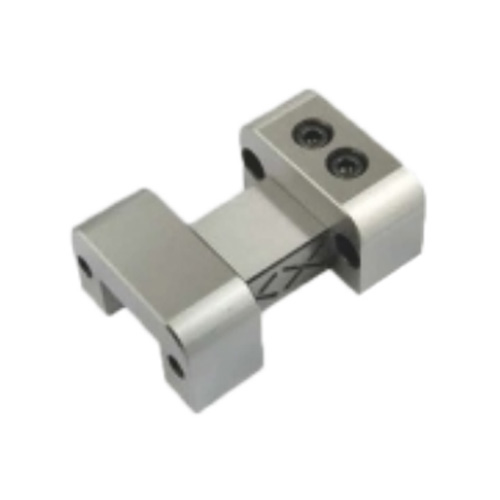
How a slide core mold Works Inside A Mold Assembly
A slide core mold uses moving components that travel sideways relative to the main mold opening direction.
During mold closing, the slide core moves into position and forms part of the cavity. Material then fills the cavity and creates the desired geometry around that feature.
Before the molded product is ejected, the slide core retracts. That movement releases the side feature and clears the path for removal.
| Production Stage | Slide Core Position |
|---|---|
| Mold Closing | Moves into forming position |
| Filling Stage | Remains locked in place |
| Cooling Stage | Holds cavity shape |
| Mold Opening | Begins withdrawal |
| Ejection Stage | Fully released from part |
The movement sequence must remain coordinated throughout the cycle.
Poor timing may create interference between moving components and the molded product. Smooth operation depends on proper alignment and controlled travel throughout opening and closing actions.
Which Part Features Often Require a slide core mold
Not every product requires side-action mechanisms. Many simple parts can be produced with a conventional mold structure.
A slide core mold becomes useful when geometry prevents direct release.
Examples include:
Side Openings
Openings located perpendicular to the main mold direction often require side movement for formation and release.
Retention Features
Locking structures may trap the product inside the cavity after cooling.
Recessed Areas
Deep side recesses can create mechanical interference during ejection.
External Hooks
Hooks and clips frequently contain undercut geometry that cannot be released through straight-line movement.
Complex Side Profiles
Some products include decorative or functional side details that extend beyond standard mold opening directions.
As product geometry becomes more integrated, the need for side-action structures often increases. Rather than adding secondary operations after molding, manufacturers frequently incorporate such features directly into the tooling.
How Mold Designers Evaluate The Need For Slider Mechanisms
The decision to use a Slider In Injection Molding system generally begins during product evaluation.
Designers review the geometry and examine how the part will leave the mold after cooling. The primary question is straightforward:
Can the product be released without interference?
To answer that question, several factors are examined:
- direction of mold opening
- location of side features
- depth of recessed areas
- position of locking structures
- expected release behavior
A simple visual review may reveal areas where direct ejection would create problems.
Design teams often focus on identifying potential contact points before tooling construction begins. Early analysis can reduce later adjustments and help avoid damage-related issues during production trials.
Part geometry, release direction, and tooling movement are therefore evaluated as a connected system rather than as separate elements.
What Types Of Part Damage Can Be Reduced Through Proper Slider Design
Not every molding defect is related to release conditions. Material flow, cooling behavior, and processing parameters also influence final quality.
Even so, a properly designed slider can help reduce several common forms of mechanical damage.
Examples include:
- surface scratching
- edge chipping
- stress whitening
- localized deformation
- crack formation around undercuts
Each of these issues is linked in some way to force concentration during part removal.
When release forces become more evenly distributed, sensitive areas face less stress. As a result, molded products can leave the cavity with fewer visible defects and less structural strain.
The relationship between release design and product quality remains an important consideration in modern mold development.
Key Design Considerations For Slider In Injection Molding
A slider may appear to be a small section of a mold, yet its influence extends far beyond the area it forms. Once movement is added to a mold structure, designers must consider how that movement affects stability, wear, alignment, and part release.
Travel distance is one of the points examined early in development. Insufficient movement can leave part features partially engaged with the mold. Excessive travel may occupy additional space inside the tooling and introduce unnecessary complexity.
Alignment also receives considerable attention. During production, moving sections repeatedly enter and leave the forming position. Any variation in positioning can affect the shape of the molded feature or create visible marks along part surfaces.
Several design areas are commonly reviewed:
- movement path consistency
- contact surface condition
- fit between moving sections
- support during repeated operation
- release clearance around molded features
Another consideration involves load distribution. Side-action mechanisms are exposed to repeated opening and closing movements. Uneven loading can gradually affect movement quality and increase wear between contacting surfaces.
A practical design often focuses on achieving stable movement rather than creating an overly complex structure. In many mold shops, simplicity in motion frequently contributes to long-term reliability.
Comparison Between Standard Mold Structures And slide core mold Configurations
Not every product requires side-action movement. Many components can be produced with a straightforward mold arrangement where opening and ejection occur along a single direction.
The situation changes when product geometry introduces side features that cannot follow the primary release path.
| Mold Structure | Suitable Geometry | Release Characteristics | Potential Damage Risk |
|---|---|---|---|
| Standard Mold | Straightforward shapes | Direct ejection | Lower for simple parts |
| slide core mold | Side features and recessed areas | Controlled side release | Reduced for complex geometry |
The choice is usually determined by part design rather than tooling preference.
A simple housing with smooth walls may not require additional movement. A component containing side clips, openings, or locking details often benefits from a release mechanism that removes those obstacles before ejection begins.
From a manufacturing perspective, the goal is not to increase mold complexity without reason. The objective is to create a release path that matches the geometry of the product.
How Material Behavior Influences Slider Performance
Mold movement and material behavior are closely connected. A slider may operate correctly from a mechanical standpoint, yet the molded product can still present release challenges depending on how the material responds during cooling.
As plastic cools, dimensional changes occur naturally. The amount and direction of that change vary according to part shape and material characteristics.
Several factors can influence release behavior:
- shrinkage around side features
- surface friction against mold walls
- flexibility of thin sections
- stiffness of thicker structures
- interaction between cooling and geometry
A part that shrinks tightly around a side feature may require more release clearance than originally expected. A flexible component may bend slightly during ejection, while a rigid structure may transfer stress directly into localized areas.
For that reason, mold designers rarely evaluate the slider alone. The behavior of the molded product is considered alongside the movement of the tooling.
Successful release often comes from balancing both elements rather than focusing on one side of the process.
Common Challenges In slide core mold Operation
Moving mold sections create opportunities for more advanced product designs, though they also introduce operational challenges that require attention over time.
One common issue involves alignment.
After repeated cycles, small changes in contact surfaces may influence positioning accuracy. Even minor variations can affect molded features, particularly when detailed side geometry is involved.
Other challenges may include:
- wear between sliding surfaces
- increased friction during movement
- contamination within moving areas
- resistance caused by inadequate clearance
- inconsistent travel during opening and closing
Many of these issues develop gradually rather than appearing suddenly. A mold may continue producing parts while movement quality slowly changes in the background.
Early signs often appear as subtle cosmetic marks, minor dimensional variation, or changes in release behavior.
Because side-action systems depend on controlled movement, maintaining that movement becomes an important part of long-term mold operation.
How Maintenance Practices Affect Mold Reliability
Maintenance is often associated with repair work, though routine inspection usually plays a larger role in keeping a mold operating smoothly.
Moving sections experience continuous contact throughout production. Over time, contact surfaces, guiding elements, and supporting components can show signs of wear.
Regular maintenance commonly focuses on several areas:
- cleaning moving sections
- checking contact surfaces
- reviewing alignment conditions
- monitoring wear patterns
- removing debris from travel paths
Small accumulations of material residue may affect movement quality. Surface wear can gradually alter fit between components. Neither issue necessarily causes immediate failure, yet both can influence molding consistency over longer production periods.
Maintenance schedules vary from one production environment to another. Regardless of the specific approach, the goal remains similar: preserving stable movement and reducing unexpected interruptions.
A mold that opens and closes smoothly often provides more predictable release behavior than one operating with increasing resistance.
Why Slider In Injection Molding Remains Important For Complex Product Designs
Product development has moved toward greater feature integration. Instead of assembling multiple pieces together after molding, designers often incorporate more functions into a single component.
As a result, part geometry frequently extends beyond simple straight-wall structures.
Common examples include:
- side locking features
- integrated attachment points
- recessed connection areas
- side openings
- structural reinforcement details
Many of these features create conditions where direct ejection becomes difficult.
Slider In Injection Molding helps address that challenge by allowing the mold to move in more than one direction during the release sequence. Rather than forcing the product to follow a path that conflicts with its geometry, the tooling adapts to the shape being produced.
The continued use of side-action systems reflects a practical need within mold design. As products become more detailed, release methods often need to evolve alongside them.
How Mold Development Continues To Improve Part Protection
Mold development rarely stands still. Changes in product design encourage ongoing adjustments in tooling strategies, release methods, and movement mechanisms.
Part protection remains a recurring focus throughout that process.
Rather than concentrating solely on cavity formation, many design teams devote considerable effort to studying how a product leaves the mold. Release quality can influence appearance, dimensional stability, and overall product condition.
Several areas continue to attract attention:
- smoother movement between mold components
- improved alignment during repeated operation
- better control of release sequences
- reduced friction during demolding
- closer coordination between product design and mold structure
In many manufacturing environments, protecting the part during removal is just as important as shaping the part itself. A well-planned release process allows molded products to leave the tooling with fewer disturbances, supporting consistent production and reducing the likelihood of damage linked to demolding conditions.

CONTACT
Get in touch
Related recommendations
Zhanmeng Mould Parts Co, Ltd. is a professional manufacturer specializing in the production, sales, and design of precision mold parts.
Contact Information
Cell phone: +86-13018824444 /
+86-18658685895
Cell phone: Machine Tools Ms. Shi:+86-13968153627
Landline: +86-576-84335476
Fax: +86-576-84330857
Email: [email protected]
Add: 23 Qingfeng Avenue, Beicheng Development Zone, Huangyan District, Taizhou, Zhejiang, China.
Mobile Site
Copyright © Zhanmeng Mould Parts Co., Ltd. Rights Reserved.
Mold Accessories Manufacturer
